
For nearly five centuries, the story of Christianity in Indonesia has largely been one of arrival: missionaries came to the archipelago, and churches grew from their work. A coalition of Indonesian churches and mission organizations now aims to reverse that direction, with the goal of seeing 30,000 Indonesian missionaries serving other nations by 2033.
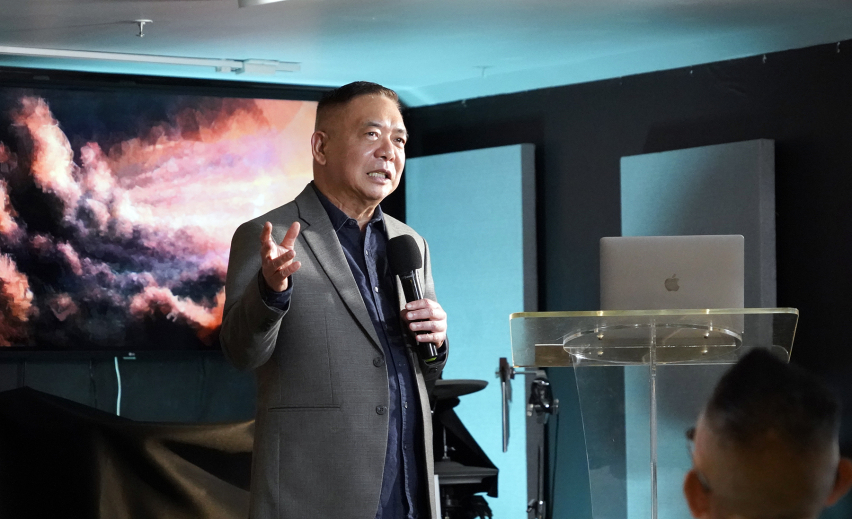
The effort is coordinated by ALUSIA, the Indonesian Alliance for World Mission, formed in 2023. This month, its chair, Dr. Bambang Budijanto, who is also general secretary of the Asia Evangelical Alliance, met with Indonesian diaspora pastors in New York and Philadelphia. The meetings were the first in a planned series of gatherings with Indonesian churches abroad.
The U.S. meetings are one part of a larger strategy. Budijanto traces its roots through decades of revival, persecution and prayer in Indonesia, and through earlier attempts to build a sending movement.
"If we dream it alone, it will not happen," Budijanto told Christian Daily International in an interview on the sidelines of the New York event. "If many people dream together, it could happen."
A debt to other nations
The first missionaries reached the Maluku Islands, in what is now eastern Indonesia, in 1534. Budijanto noted that the first missionary died about a year after arriving.
The 500th anniversary of that arrival falls in 2034, one year after ALUSIA's target date. Budijanto said he hopes that by then Indonesia will be recognized as a significant mission force in its own right.
Indonesia received the gospel from others, and today it has about 30 million Christians. "We owe other nations," he said. When describing ALUSIA's purpose, he pointed to the biblical image of the beautiful feet of those who bring good news.
Budijanto recounted Indonesia's history of revival and considers it as preparation for sending. He pointed first to the 1965 revival in Soe, on the island of Timor. Mel Tari described it in his books "Like a Mighty Wind" and "The Gentle Breeze of Jesus," including reports of miracles and of believers who carried the movement to other places.
In the 1970s, revival spread among the Dayak people of Borneo. In the late 1970s and 1980s it reached Indonesia's major cities. By 1984, Budijanto said, Jakarta alone had more than 5,000 prayer groups.
"God blessed Indonesia with a lot of revival for a purpose. That's how I read it," he said. "We are blessed to bless others."
He also sees a warning in the more recent data. Church growth in Indonesia has plateaued, and he believes the two are connected. "If you continue to be selfish, then the blessing will stop," he said.
Prayer for persecution, so the Church would unite
In the 1980s, Budijanto worked as a translator for Brother Andrew, the founder of Open Doors, during his visits to Indonesia. On one visit, Brother Andrew walked to the village where Budijanto lived, because there was no road access.
At the time, Budijanto said, Indonesia's churches were divided and often competing with one another. He recalled that at one pastors' conference, Brother Andrew asked those present to pray that God would send persecution, so that the Church would be united.
In the years that followed, Indonesia went through waves of anti-Christian violence. Budijanto said more than 500 churches were burned and many people died, including in the conflict between Muslims and Christians in Maluku.
"But then the church united," he said.
A national prayer movement also took shape during that period. Budijanto said it began in 1991, with seven coordinators who met monthly and held prayer gatherings in different provinces. Today, more than 500 Indonesian cities, 534 by his count, maintain 24-hour prayer in what participants call "towers of prayer." The model has spread to Myanmar and other countries, and Indonesians have played a significant role in global prayer networks.
Asked what Indonesia might contribute to the global Church, Budijanto pointed to that movement. "Maybe that's the prayer movement," he said, describing it as the effort that has been sustained over many years.
Earlier attempts stalled, ‘but now is the time’
The idea of Indonesia as a sending nation is not new. Since the 1970s, Budijanto said, church leaders have expressed the desire repeatedly, but none of the efforts took hold. "It's like starting and then stalling again, stopping again, dying again," he said.
One of those efforts grew out of the prayer movement. Soon after it began, Budijanto said, interest in mission increased, and a mission initiative was formed in 1992. He was given the task of building a training center.
That work took him to Europe. Thousands of Indonesian students were studying in the Netherlands and Germany on government scholarships, and many had become Christians. When they returned home, many could not find work that matched their training, and they left again for the Middle East or Australia.
Around the same time, Brother Andrew sent Budijanto to Israel. Budijanto said strangers there would ask where he was from and then assume he was Muslim. To him, this showed that an Indonesian identity could open doors across the Middle East.
He concluded that Indonesian graduates with European degrees could serve in the region with relative ease. From 1992 to 2002, he ran a five-week summer mission school in the Netherlands, working with Fuller Seminary. The initiative also tried to send two missionaries to China.
The organization did not last. "I think we were not mature enough to work together," Budijanto said. "But now is the time, I think."
A kairos moment for the Indonesian Church
In 2023, Budijanto invited leaders from about 14 Indonesian organizations that already had experience sending missionaries abroad. He said all of them agreed on one point: "This is the right time, this is the right moment, this is the kairos of God."
The group met again in Bandung to define its vision and how its members would work together. It registered ALUSIA as a legal association in Indonesia, with a general assembly of members as its highest authority, a structure Budijanto compared to that of the World Evangelical Alliance. A soft launch in Jakarta drew about 50 church leaders, along with leaders of mission organizations from abroad. ALUSIA then commissioned baseline research with Bilangan Research and launched nationally at a conference in Bali.
After the launch, Budijanto said, churches and organizations that had been hesitant began to approach the alliance. A second national conference followed in Jakarta. In 2026, ALUSIA moved to regional conferences in provinces including Central Java and North Sumatra, and more are planned for additional cities.
The alliance describes its role as a catalyst with three tasks. The first is to activate churches, which Budijanto called "the primary carrier of the global mission." The second is to connect them with each other and with the wider global Church. The third is to provide resources, including research data and training tools.
From 800 to 30,000: ‘not easy, but doable’
The baseline is modest. In 2020, Budijanto said, Indonesia had about 800 missionaries, and more than half of them were serving Indonesian communities abroad rather than people of other nations.
The target of 30,000 by 2033 amounts to about 0.1% of Indonesia's roughly 30 million Christians. "It's not easy, but it's doable," he said.
Budijanto acknowledged that missionaries are hard to count today, because people may serve as professionals, migrant workers or in other roles. For that reason, ALUSIA treats 30,000 as an aspiration. It measures progress by the number of churches that become missional.
Its goal is for at least 20% of Indonesia's churches to meet that standard. Budijanto referred to government data listing about 73,000 officially recognized church buildings, which belong to Protestant denominations, not including Catholic churches. He estimates the total is closer to 100,000 when congregations meeting in shops and other spaces are included.
ALUSIA has proposed five indicators of a missional church: giving to global mission; sending people, or taking part in sending them; praying for global mission; building mission capacity through training or programs; and collaborating with other churches or organizations. A church that meets four of the five would qualify as a missional church following this definition.
Budijanto said many churches also join the alliance for its data, which they otherwise lack.
The 30,000 figure has also spread beyond ALUSIA, Budijanto noted, pointing to at least four other Indonesian networks that have adopted the same number. He also heard of an Indonesian church leader at a mission conference in Vietnam who spoke of sending 30,000. "This is a common aspiration that we have," he said. "It doesn't belong to any organization, but to Indonesia."
Who counts as a missionary
ALUSIA defines mission by intent and discipleship, not geography. Budijanto said the work must be rooted in the Great Commission, intentionally helping people move from being far from Christ to "knowing Christ, growing in Christ, becoming like Christ."
Under the alliance's definition, a missionary is any Indonesian, living anywhere in the world, who intentionally reaches out to and disciples people who do not hold an Indonesian passport.
That work can take place inside Indonesia. As an example, Budijanto cited a Russian community in Bali, formed by people who left Russia after the war began to avoid being drafted. Indonesians who move to Bali to reach that community count as missionaries under ALUSIA's definition.
The key, he said, is intention. Contact with people of other nations has to be purposeful, not incidental.
‘With numbers comes responsibility’
Budijanto pointed to Indonesia's cultural diversity as a strength for cross-cultural mission. He contrasted it with South Korea, which he said has sent about 30,000 missionaries despite being largely monocultural.
He often brings Korean colleagues to Indonesian mission conferences. He said they tell Indonesian audiences that growing up among many cultures prepares them to adapt abroad, something Korean missionaries have had to learn. "You are so privileged. You are so prepared by God," he recalled them saying.
He also cited the size of the Church. Over the past two decades, Budijanto said, significant church growth has come mainly in Africa and Asia. Within Asia, the growth has been concentrated in Southeast and South Asia, where Indonesia's church may be the strongest by numbers. "With numbers comes responsibility," he said.
The largest obstacle, in his view, has been mindset. After a long colonial history, many Indonesian Christians came to see themselves as recipients who could not take the lead. Over the past two years, he said, he has seen that begin to change as churches move from contributing to taking initiative.
Generosity is another asset. Indonesia ranked first in a global generosity index for four years, Budijanto noted. The data he cited also showed a gap between giving and other forms of engagement. About 60% contribute financially to global mission, but only about 30% preach on it from the pulpit and about 16% pray for it.
The diaspora as ‘low-hanging fruit’
ALUSIA sees Indonesian churches abroad as its most immediate opportunity. More than 500 Indonesian diaspora congregations exist worldwide, and more than half of them are in the United States. Budijanto calls them "the low-hanging fruit."
Many of these churches serve only Indonesians, he said, and many are losing their second generation. He believes a new focus could help revive them. "We are here not for Indonesian people, but to prepare Indonesian people to become missionaries for other people," he said.
That is why ALUSIA chose New York and Philadelphia for its first diaspora meetings. Budijanto said the place where a movement launches shapes its impact. He noted that people from about 120 nations live in a single area of Queens, which is where ALUSIA held the event that day. Churches there do not need to travel far to reach other nations. "This is mission training as well," he said. He described Philadelphia as historically important for the United States and home to a larger number of Indonesian churches.
More meetings are planned. ALUSIA intends to hold gatherings in two California cities in November, and pastors in Dallas have asked for a stop in Texas. Meetings in Sydney and Melbourne are planned for next year. Singapore, Malaysia, Hong Kong and Taiwan, all home to significant Indonesian communities, are also on the agenda.
Toward a global gathering
The next major step is planned for the first week of October 2027. ALUSIA plans to hold the first conference to bring together Indonesian missionaries from around the world, including those in the diaspora. The venue has not been decided, and Bali, Singapore and Malaysia are under consideration.
Budijanto hopes participants will form an association of Indonesian missionaries there, so that they have "a voice" and a community.
The alliance's longer horizon remains 2033, when it hopes to celebrate 30,000 Indonesians serving other nations. Over the past two years, the alliance has spread quickly and found wide acceptance, Budijanto said. He believes this is a sign that the timing is right.


